01Event Risk & Life-Safety Assessment
Evaluate the venue, event footprint, audience profile, attendance, crowd movement, access and egress, emergency routes, fire and life-safety conditions, medical demand, weather exposure, transportation, utilities, temporary structures, vendors, staffing, and nearby hazards. Findings are converted into practical controls, assigned actions, and planning priorities.
02Emergency Action & Contingency Planning
Develop event-specific procedures for evacuation, shelter-in-place, severe weather, fire, medical emergencies, hostile threats, missing persons, suspicious activity, utility loss, transportation disruption, reunification, cancellation, delayed opening, and safe restart. Plans define triggers, authority, notifications, responsibilities, and protective actions.
03Integrated Event Operations Plan
Build the operating plan leadership and field teams will actually use: objectives, organization, assignments, communications, medical coverage, safety priorities, resource locations, staging, traffic and pedestrian movement, credentialing, accountability, maps, decision thresholds, and operational-period briefings.
04Agency, Venue & Vendor Coordination
Bring venue operations, event management, security, police, fire, EMS, emergency management, transportation, public works, communications, contractors, and key vendors into one planning process. We clarify roles, close handoff gaps, coordinate capabilities, and establish how information and requests will move during the event.
05Weather, Crowd & Operational Monitoring
Establish who monitors changing conditions, what information is trusted, when leadership is notified, and which thresholds trigger protective action. This can include severe weather, heat, air quality, crowd density, traffic, medical activity, emerging threats, infrastructure problems, and other conditions affecting safe operations.
06Command, Control & On-Site Support
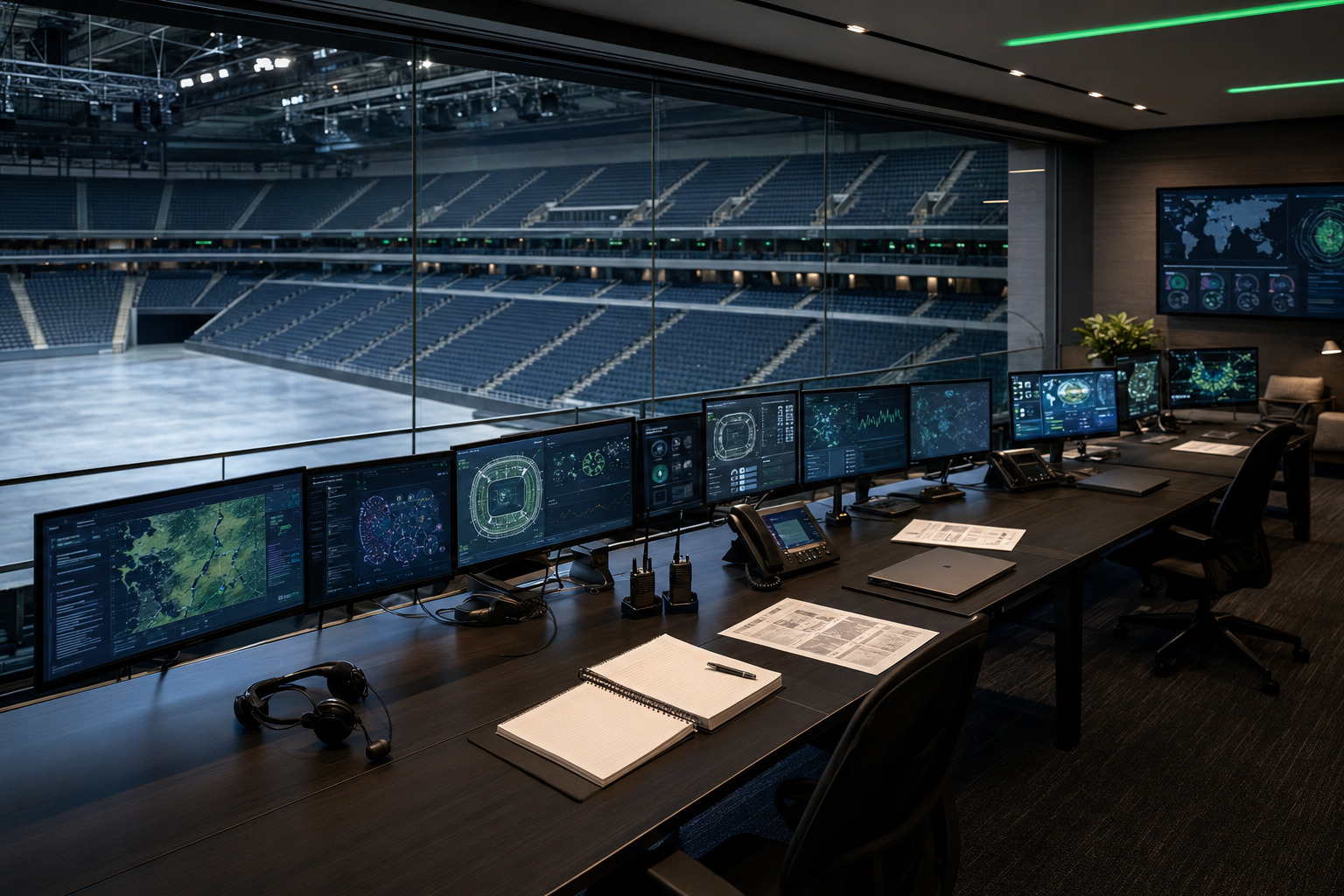
Help establish the event command structure, command post, reporting rhythm, situation updates, resource tracking, issue escalation, executive decision support, and incident documentation. When requested, our personnel can support planning and coordination on site so event leadership is not managing a developing incident alone.
07Dignitary & Executive Movement Planning
Coordinate with the responsible protection and security teams on advance work, access control, arrival and departure routes, holding areas, communications, medical contingencies, emergency movement, and integration with venue leadership and public-safety partners.
08Training, Exercises & Event-Day Readiness
Brief staff and vendors on the plan, test communications and decision procedures, conduct tabletop or functional exercises, verify corrective actions, and lead final readiness checks. After the event, we document lessons, assign improvements, and strengthen the next operational plan.